
Inside Bamboo Fabrics: Processing Methods, Recycling, and Environmental Effects
- MARY ANN MAGUDANG
- May 30
- 4 min read

Bamboo fabrics have gotten a lot of attention in the textile industry lately because they are soft, breathable and good for the environment. People use bamboo fabrics to make all sorts of goods like clothes, towels and bedding. As more and more people want to use materials, bamboo has become a really popular choice for making textiles.
While bamboo comes from a renewable plant source, the environmental impact of bamboo textiles depends on how the fibers are processed and manufactured.
It is really important for people who make textiles and for people who buy them to understand how bamboo fabrics are made.
Bamboo Fiber Production

Bamboo is a resource because it grows fast and can be harvested without hurting the environment. It does not need a lot of water or pesticides to grow which makes it a good choice for making textiles.
To turn bamboo into fabric, the plant is processed into fibers, spun into yarn, and then knitted or woven into fabric.
Some of the things that make bamboo a good choice for textiles include:
• It grows fast and is a renewable resource
• It is breathable. Feels nice against the skin
• It is soft and can absorb moisture
• It can be woven or knitted into all sorts of fabrics
Today, there are two kinds of bamboo fabrics: bamboo viscose and conventional bamboo rayon. Both of these fabrics come from bamboo. They are made in different ways.

Bamboo Viscose Production
Bamboo viscose is a common kind of bamboo fabric. It is made by breaking down the bamboo into pulp and then dissolving it in chemicals. The resulting fibers are soft and smooth and can be spun into yarn and turned into fabric. Bamboo viscose is known for its softness and breathability which makes it a good choice for clothes, towels and bedding.
Because bamboo viscose is so soft and absorbent, it is often used to make:
• Casual clothes
• Sleepwear and undergarments
• Active wear
• Towels and bedding
Even though bamboo viscose comes from a source, the way it is made can have a big impact on the environment. The factories that produce bamboo viscose must be careful about how they use chemicals and manage their waste.

Conventional Bamboo Rayon Processing
Conventional bamboo rayon is made in a way to bamboo viscose but it uses more chemicals and can be harder on the environment. The old way of making rayon used a lot of chemicals like sodium hydroxide and carbon disulfide.
These chemicals can pollute the air and water if they are not managed properly. That is why some people are critical of bamboo textiles even though they are marketed as being good for the environment.
Nowadays, textile manufacturers are trying to make rayon sustainably. They are using closed-loop systems that recover and reuse chemicals, which helps to reduce waste and pollution.
Differences in Yarn and Fiber Structure
The way that bamboo fibers are processed can make a difference in how they feel and look. Bamboo viscose fibers are soft and smooth which makes them a good choice for fabrics and clothes.
These fibers have:
• A silky texture
• A nice drape
• A consistent look
• A comfortable feel
On the other hand, mechanically processed bamboo fibers are coarser and stronger. They keep more of the texture of the bamboo plant, which gives them a more natural look and feel.
However processed bamboo fibers are not as common as bamboo viscose because they are more expensive and harder to make.
Environmental Effects of Bamboo Fabric Production

Bamboo is often considered an environmentally friendly material because it grows quickly and requires less water and fewer pesticides than many traditional crops.
The way that bamboo fibers are processed can have a big impact on the environment. Conventional rayon manufacturing uses a lot of chemicals and energy which can pollute the air and water.
Some of the concerns about conventional bamboo rayon production include:
• Using chemicals to dissolve the bamboo pulp
• Managing wastewater and preventing pollution
• Using a lot of energy to power the factories
• Releasing air emissions without recovery systems
On the other hand, modern factories that use closed-loop technology can reduce waste and pollution by recovering and reusing chemicals.
Recycling and Decomposition
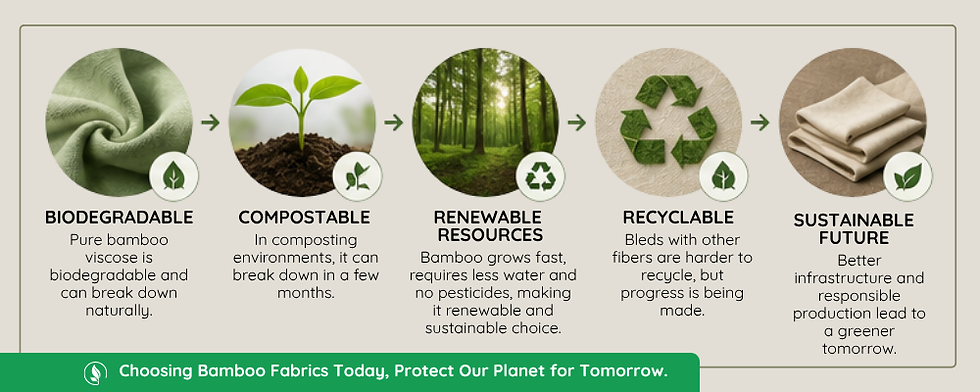
Bamboo fabrics can be recycled. It depends on what they are made of and how they are finished. Pure bamboo viscose fabrics are biodegradable, although decomposition happens faster in composting environments than in landfills because there is not enough air and moisture.
Recycling bamboo textiles is harder when they are blended with fibers like polyester or elastane. It is harder to separate and process these fibers, which makes it harder to recycle them.
Processed bamboo fibers are more biodegradable because they are not altered as much during production. There is still not a lot of infrastructure for recycling bamboo textiles.
The Future of Bamboo Fabrics
As people become more concerned about the environment, bamboo fabrics are likely to become more popular. Manufacturers are working to make more sustainable production systems, which will help to reduce the environmental impact of bamboo textiles.
At the time there was a growing trend towards transparency in the textile industry. People want to know where their fabrics come from and how they are made. Understanding the differences between bamboo viscose, conventional rayon and processed bamboo fibers can help manufacturers and consumers make more informed choices.
While bamboo is a resource the real impact that bamboo textiles have on the environment depends on how they are processed, manufactured and managed
Looking for Bamboo Fabric Solutions?
At JDO Resources we help companies find high-quality textile materials that are good for the environment. We can help you find fabric options, customize textiles and develop new products.
Whether you are looking for bamboo-based fabrics, yarn solutions, woven textiles or knitted fabrics we can help you with your sourcing needs.
You can connect with us at:
• Email: info@jdo-resources.com
• WhatsApp: @jdo_resources
• Telegram: @jdo_resources


Comments